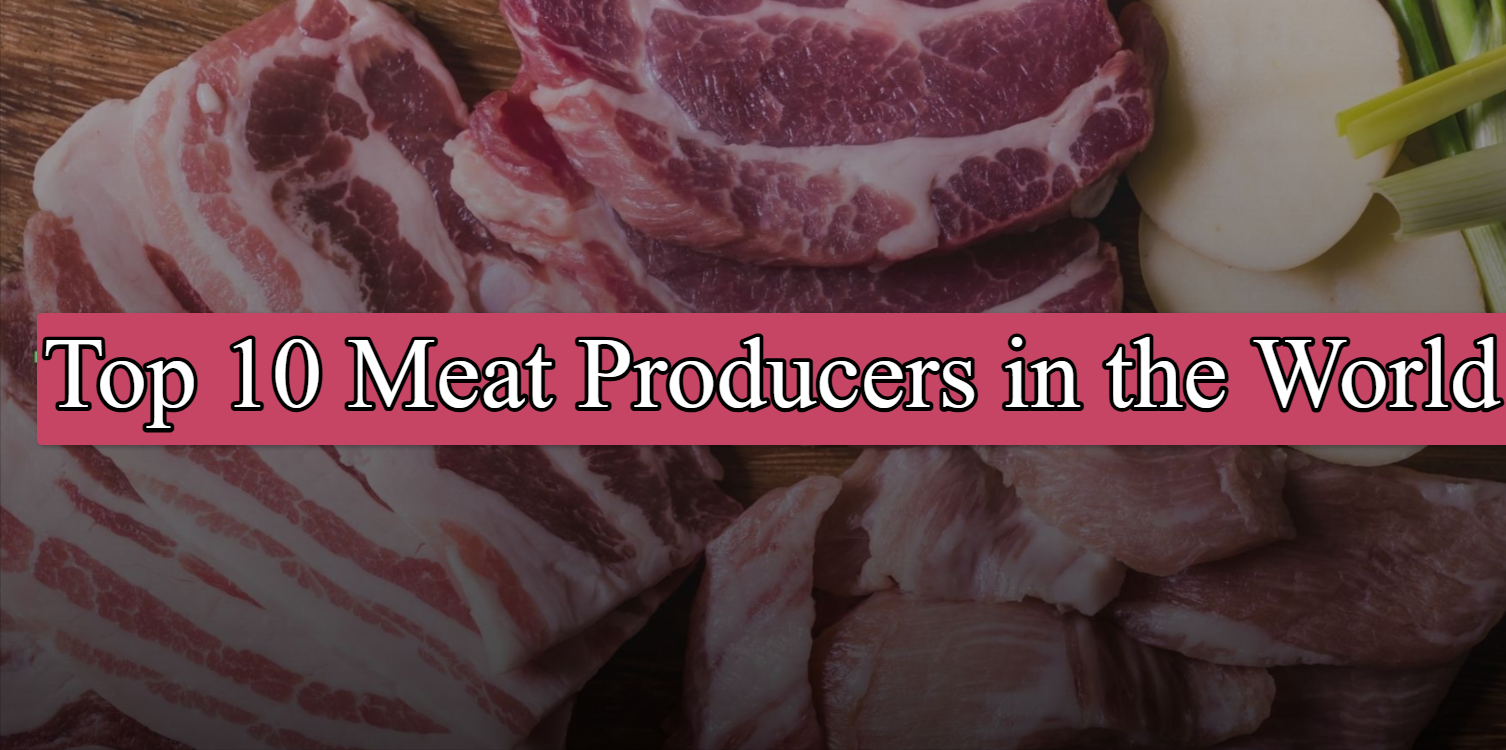
The market for meat is constantly expanding across the globe. Not just in countries that have meat as the main food item, as well as in countries where vegetarian foods were a included in the meals of every day and meat is eaten and enjoyed by large portions of the people. It’s not just because of the variety of flavours when cooked, barbecued or boiled or to cook them in a variety of ways, this food item is loved by many people across all over the world. In the past 50 years the production of beef has increased too. The data for 2023 indicates the existence of a quadruple growth in the number of people who eat meat from 1961 to 2023. In the present, the amount of meat per year is estimated at 357 million tonnes.. We will therefore be discussing the top 10 nations that have earned the distinction as the biggest meat producers in the world.
Top 10 Meat Producers in the World
1. China
China is the most producer of meat on the planet, with the production of 96.41 million tonnes of metric tons, which represents the equivalent of a 3.4 percentage increase over prior year. The massive production is driven by China’s huge population and growing demand from the domestic market in meat, specifically pork, which makes up large proportions in the overall. China’s government has invested a lot in modernizing its farming practices to accommodate both the demand for domestic food and export possibilities. Despite the challenges, such as outbreaks of livestock diseases and the meat industry in China is still the dominant one all over the world and is a key actor in ensuring the security of food and influencing global trade patterns.
2. United States:
Long-time meat producer the US is a close second to Brazil. Its 47.53 million tonnes of production boost its position as a leader in this crucial sector. A variety of factors aided the US beef industry. The first is that the cattle industry has huge farms and excellent breeding. The robust infrastructure provides the availability of a constant supply of cattle and provides the foundation for the meat industry. The second reason is that US processors make use of cutting-edge technology. These facilities are safe and hygienic. process beef and produce top-quality products. This emphasis on hygiene and quality has boosted local consumption and exports of meat. The US agriculture industry is a leader in technological advancement. The development of technology has improved the nutrition of animals, veterinary treatment and processing. These improvements boost productivity, yields, as well as the market share of global markets.
3. Brazil:
Brazilian beef is king! The South American superpower dominates meat production because of its massive fields, abundant crops and a growing agricultural sector. Brazil produce 30.39 million tonnes of poultry and livestock annually. Brazil does it, but how? It is possible because they are combing natural benefits and efficient agriculture. Brazil’s warm, dry climate is ideal for livestock and food crops. Brazil’s abundance of resources allows for the production of large-scale, efficient agriculture. Brazil requires much more than Mother Nature. They’ve also invested heavily in new farming techniques to increase yields and increase efficiency. Brazil is advancing agriculture through livestock husbandry and feed technology.
4. Russia
The meat industry in Russia experienced constant growth, fueled by advances in technology for agriculture and a growing demand from the domestic market. Russia produced about 12.5 millions tonnes of beef in the last year, with pork and poultry dominating the market. Poultry was responsible for almost half of the production and pork was next, which increased significantly thanks to the support of the government and growing export markets, particularly in Asia. Russia has been focused on self-sufficiency and cutting down on imports of meat, which has led to substantial investment in modernizing the livestock agriculture.
5. India:
The huge population of India and the delicious tradition of cooking The country’s huge population and its rich culinary traditions India a major meat-producing country. India produces 10.6 million tonnes of meat annually to supply a massive local market that is in need of chicken, buffalo and goat meat, despite its limited resources and complexities in regulatory. In the Indian meat industry follows traditional farming methods that are distinctive. Traditions of cattle husbandry and animal husbandry ensure that the country has meat. Technology and knowledge from the past provide a vibrant environment in which technology and tradition can are in harmony. It is said that the Indian administration has modernized its agriculture through improving the health of animals breeding, feed, and production.
6. Mexico
Mexico’s meat production has remained strong with estimated production at 8 million tonnes. The Mexican meat industry is varied with poultry the biggest source of protein in the country, then pork and beef. Poultry production was responsible for nearly 50% of total output of the meat industry, which was aided by a strong domestic demand and a growing demand for exports. Beef production also showed steady increase, driven by the increasing exports of Asia, the United States and Asia. Mexico is investing in improving the practices of livestock farming and making sure that the production is sustainable in order to comply with international standards. This has helped cement Mexico’s status as a leading meat producer on the international market.
7. Spain:
Spain is a vibrant country, with its lively food scene, awe-inspiring culture and 7.5 million tonnes of beef produced makes it the top 10 list. Spain’s beef farming and food culture help to support its global place in the meat industry. The Spanish meat industry is dominating by beef and pork. Professional attention to the smallest of details is guaranteed from animal handling through processing and the delivery of products. Spain’s wide selection of premium meat products for both local and international markets demonstrates its commitment to the highest quality. Spain is known for its heritage of cattle farming and its high efficiency. The skills and traditions of the families have helped keep animals healthy and enhanced the quality of meat. Responsible farming fulfills the worldwide demand for sustainable, ethically sourced food.
8. Germany
The meat production in Germany was estimated at 7 million tonnes which remained its status as the top meat producer across Europe. Pork was the mainstay of the market and accounted for more than two-thirds of total output, which reflects the nation’s strong culture and focus on exports. Beef and pork were also significant contributors to the production, while poultry saw steady growth due to the increasing demands for healthier protein alternatives. The German meat industry is increasing adopting sustainable practices, with a focus on reducing emissions as well as improving the welfare of animals. Germany is still a major exporter of pork and other processed meat products, mainly to other EU nations as well as Asia.
9. Argentina:
The vast grasslands of Argentina and the ancient ranching practices make it stand out in the world of cattle. Argentina produces 6.3 million tonnes of premium and delicious beef every year. Argentina’s meat industry is dependent heavily on pasture-based agriculture. Free-range cattle feed on legumes and grasses on fertile plains. This technique improves the care of animals and yields healthier, leaner meat that is more delicious and tasty. Additionally, Argentina has wonderful weather. Its climate is ideal for the breeding of cattle and its development due to the mild summers and winters. Argentina produces top-quality beef that is up to international standards due it has a natural advantage and the expertise of ranchers. The long-standing history of ranching makes the business in Argentina productive.
10. Pakistan
The meat production in Pakistan amounted to 5.5 million tons, driven by the strong domestic demand as well as a growing export market. The main contributors were poultry and meat. major producers and beef accounted for a significant portion of the total because of its importance in the context of food and culture. Poultry production has also seen an increase in production, aided by investment to modern methods of farming as well as the growing popularity of products made from chicken. Pakistan is focusing on increasing its exports of halal meat and catering to markets in Asia, particularly the Middle East and Southeast Asia.
Conclusion
From the information above, it is clear. One thing that is clear is that the interest of palates with different meat-based dishes is growing rapidly. Furthermore these countries will need to increase the meat supply in line with the demand. This is why these countries are utilizing the latest technology for meat production and refinement which allow them to export globally top quality of meat.